Geekamama


3 Comments

Curveball caught, life goes on

Sometimes life throws you curveballs.  I’ve had a few myself, the most recent being just a couple weeks ago.  I’ve noticed that the key to surviving unexpected situations seems to be how well you can adapt to the new version of “normal.”  Heck, even for surviving expected situations (bringing home a new baby, switching jobs), when it’s a significant change to what you were used to.  It’s been about two and a half weeks now since Return of the Seizures, and we’ve had to make some changes at home in response.  Most of them have been minor ones, but breaking old habits and forming new ones can be a little rough until the changes become routine.

The biggest issue for us is that I’m temporarily restricted from driving.  Even though it does feel like we’ve got the seizures under control for now (they haven’t been back since I left the hospital), we’ve been abiding by the restriction for the time being. My husband and I carpool to work now, and he drops me off and then takes Kiddo to daycare himself, since daycare and my husband’s office are very close to each other.  In the evening they pick me up.  It’s been nice driving in as a family, even though it’s meant having to shift around some work hours and responsibilities.

I’ve also had to get back in the habit of taking medication twice a day.  Thankfully, I’m no longer feeling the dizziness on it that I was experiencing the first couple days.  I have a new neurologist now, and I like him a lot. My old doctor’s office was very far away, and they couldn’t see me until the end of May.  This new one is closer, is associated with some of my other regular doctors, and was able to get me in for a visit much sooner.  Switching doctors often means going through another round of tests, and I’m not thrilled about that, but since medical science continues to advance, perhaps they’ll find something helpful this time.  The good news is that my new doctor was willing to switch me from the Keppra that I’m currently taking back to the Lamictal that I took several years ago with great results.  It’s a multiple-week ramp-up process, so I’m sure there will be some emotional ups and downs over the next month or  so, but I’m willing to suffer through that knowing that it has worked well for me before.

In my limited seizure experience, the only time there was a single contributing factor was when I was drinking heavily.  In all other cases, it’s been an accumulation of multiple factors: insufficient sleep, high stress levels (often work- or school-related), and a slightly weaker physical state due to illness. The last one is difficult to avoid entirely, and the first one can also be a challenge with a young child in the household. But there are things I can do about my stress levels at work, and I’m taking steps in that direction.

Other than that, life at our house hasn’t been too affected by this event.  In many ways that’s great, but it also makes it easy to forget sometimes why we made those changes in the first place.  I get busy enough in the evenings that in between sorting laundry and cleaning up dinner leftovers, sometimes it slips my mind that I was supposed to take a pill until it’s overdue by a couple hours.  If I had a severe enough seizure history that forgetting to take my pill on time almost always led to seizures, I’m sure it would be a top priority every night.  But instead, sometimes the more immediate demands of life distract me from those tasks with less obvious results.

For all that I’m willing to talk about it and write about it, let me be clear about one thing:I hate having this diagnosis. I don’t like the practical and emotional impact it has on our family, and I don’t like the idea that my brain needs help to function properly. I just want to be normal again (or as close to it as I’ve ever managed to get.) But I’ve adapted to it before, and we can deal with this now.

6 Comments

Reader question: Did changing diapers lead to a change of mind?

Recently I challenged some friends to come up with blog topics for me. My friend Sora suggested this one: how have your opinions about parenting changed since actually becoming a parent?

I have to cast my mind back almost two years to answer this one. I remember feeling very uncertain, especially as the due date got closer. It seemed like there were so many different approaches to parenting.  So many books.  So many philosophies. How would we know we were making the right decisions, especially in cases where we wouldn’t see the results for literally years?

In many ways, it got easier after the delivery.  There were a lot of decisions that became moot, because we went with what felt instinctually right.  For example, when to start solids? We just waited until Kiddo started showing interest. The best guideline I’d heard was that when we started feeling guilty about eating “real” food in front of him, that would be the time. As imprecise as that sounds, it turned out to be spot on. One day not long before he turned six months old, he started showing a different kind of interest in the food we were eating, as though he was trying to figure out why we were putting it in our mouths and more importantly, why we weren’t taking it back out.  A week or two later we broke out the traditional box of rice cereal, plus some avocado for variety. It was important to me that he be exposed to a variety of food, because I’m a picky eater myself and didn’t want to pass along that habit. But as it turns out, Kiddo loves to eat all kinds of things. Last night he was chowing away on chicken curry; one of the fastest new words I’ve seen him pick up was “couscous.”

There were a few areas where I’d been firm about an idea while incubating the boy and changed my mind afterward. The biggest one was Baby Sign Language. I’d written it off  years ago after an incident at a friend’s house. Even when Kiddo was born, I wasn’t planning on trying it. When my mom was visiting a week or two later, we had a conversation in the car about how useful it was for a friend’s family back home, and I found my position softening. A few months later, baby sign language books were on my Christmas list. We only learned about a dozen signs, but I’m sure glad we reversed position on this one.  Having a way for Kiddo to tell us he was all done with his food, or that he wanted more, has been a huge help in reducing frustration at the dinner table. We taught him a sign to use when asking for help and it comes up all the time. Just this morning, after he knocked all his toys off the edge of the bathtub, he turned and calmly asked me for help getting them back, rather than whining in frustration. And contrary to some nay-sayers’ belief, studies have found that learning nonverbal signs doesn’t actually delay or interfere with children’s ability to learn spoken language. Thanks, Mom!

One area where I found myself being less open-minded than I’d expected is breastfeeding. Before getting pregnant, I figured formula feeding was just as good as breastfeeding. Once I started reading parenting forums and other collections of opinions I decided breastfeeding was preferable, but that I wouldn’t be upset if we had to supplement. I was unprepared for how much of an emotional impact it would have on me. While Kiddo and I had a good breastfeeding relationship as far as direct feeding went, I struggled when it came to pumping. At work it was difficult for me to produce enough milk for him, and also a challenge to carve out regular time for pumping. At home I often stayed up late at night, trying to get just another half-ounce or so. Around five months, my husband began laying the groundwork for introducing formula, at least while at daycare. I gave lip service to the idea, but still resisted. The day it finally sunk in that I just wasn’t producing the way I needed to, I sat at the kitchen table and cried. In the long run it probably doesn’t matter when we started giving him formula in addition to pumped milk (for the record: seven months) but it was a surprise to me how much stronger my feelings about it were once I was actually doing it.

If I look back even further, before I’d actually considered becoming a parent, I think the biggest change in viewpoint was that I used to think I didn’t want kids because I’d be a terrible parent. I didn’t think I could measure up to my own parents. And heck, I enjoyed sleeping in on weekends and being able to eat whatever and whenever I wanted. I never believed that being a parent would be an easy thing (having a baby brother born just before I turned 16 cured that illusion quickly) and in part, my decision to be childless was born out of wanting to take the easy path. When my husband and I decided to try for kids, it was a big leap of faith for me. Now I honestly do believe it was one of the best changes of mind I’ve ever had.


4 Comments

The lurking demon

This past Monday evening I left the house for what was supposed to be a fun social evening, an officewarming for the new Intersect offices.  Instead, I ended up in the hospital.  After almost eight years of dormancy, my epilepsy returned with a vengeance.

I don’t talk about it much.  I don’t consider myself a Person With Epilepsy, but rather someone who occasionally had has epileptic seizures.  I was diagnosed in the summer of 1998, more than a dozen years ago, but I’ve had only a handful of incidents in that entire time.  For the first ten years, I was on medication to keep the seizures at bay (and it worked, for the most part) but when I got pregnant in 2008, it had been five years since any seizure activity and my neurologist OK’d me stopping the meds.  Call me, she said, if you have any more incidents.  We were both cautiously optimistic that we’d seen the last of them.

Everyone has a seizure threshold, the amount of stimuli needed to provoke a seizure.  For certain people, myself included, that seizure threshold is more easily reached.  The stereotypical trigger is flashing colors or lights, but only a small percentage of people who have seizures are actually triggered in that fashion.  More common triggers are sleep deprivation, stress, and heavy alcohol consumption.  For me, it’s generally a combination of factors.  This is why I don’t drink much these days; unfortunately, the others are trickier to control.

Last Monday, I was coming off an extremely rough week at work that involved a lot of late nights. On top of that, a stomach flu bug was making the rounds in my family, and I hadn’t eaten much that day.  I was feeling a little off when I got to the party, but wrote it off as merely an upset stomach even though every single seizure I’ve had has been preceded by dizziness and nausea.  Frankly, it never occurred to me that I might be vulnerable, because I thought that my seizures were a thing of the past.

At the party I got to meet a few people I’d been hoping to talk to, but mid-conversation with one of the Intersect developers, I was hit with a wave of dizziness.  I excused myself and slipped into an empty conference room, intending to sit down and collect myself before making a mad dash for the restroom.  But the next thing I knew, I was on the floor coming out of fuzzy unconsciousness, trying to reply to someone nearby saying my name.  When I finally was able to sit up, covered in blood and worse, I learned that I’d apparently fallen face-first onto the concrete floor.  We thought at the time that I might have fractured my nose, but the consensus in the ER later was that I’d just “thumped” it.  I’ve got some nice bruises to show for it.  While in the Harborview emergency room, I had another seizure.  I don’t have a clear memory of everything else that happened there–I’m told I was given Ativan a couple of times, and I was taken for x-rays (I remember them taking out my earrings) and a CT scan–so I’m very grateful that my husband was there to observe and to advocate for me.  Four days later I’m still piecing things together.

Around 1:30 a.m. I was released, and with the help of a friend, we set out to pick up the car I’d driven to the Intersect offices that evening.  We were almost there when my brain foiled that plan by misfiring again, and it was back to the hospital for us.  This time they admitted me overnight.  And from there on out, I really don’t remember much at all until the following morning.  After a few more tests and some discussion with the on-call neurologists, they decided it was safe to let me go again, and this time we made it home without incident.  Since then, I’ve been taking Keppra and resting, and have had no further seizure activity.  Then again, it’s only been four days.  It could be months before another one happens.  It could be years.  It could be never.

I’m surprised by how much this has thrown me.  After all, thousands of people live happy, fulfilling lives in spite of an epilepsy diagnosis.  Years ago, it was just a thing I dealt with, another pill to pop twice a day and a couple behavioral modifications.  But this time it’s hitting me a little harder.  Maybe it’s because the Keppra has depression listed as a common side effect, or maybe it’s annoyance at how much this disrupts our daily schedule (I’m not supposed to drive for six months) and the plans I’d roughed out for the next few years.  But I think a lot of it is due to the fact that I truly believed that this was a demon that had gone away for good.  I’d been seizure-free and off the meds with no ill effects, even through pregnancy and the sleep deprivation that comes standard with most newborns. I was convinced that whatever had gone awry in my brain at the age of 25 had somehow righted itself.  It’s a bit of a blow to discover that instead, the demon was merely biding its time, waiting for the right (or rather, wrong) combination of factors.


11 Comments

More than I could ever promise

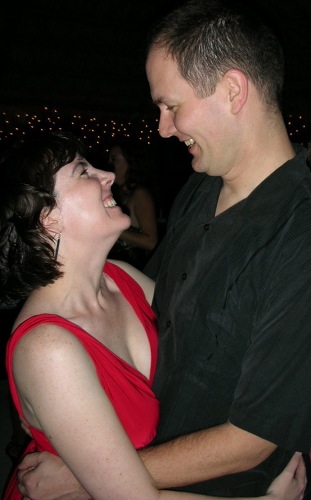
I have a husband.  He is wonderful.

We met many years ago while helping to run an intern puzzle-solving competition at Microsoft. We started dating in 2005.
In 2007, in front of about 125 people who shared our geeky puzzle-y interests, he asked me to marry him.
I was so surprised that it took me several seconds to respond.


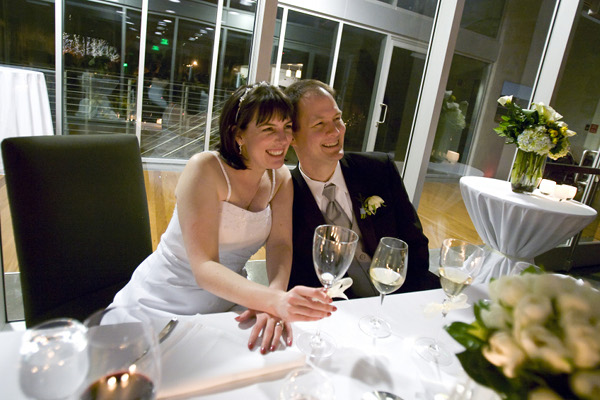
We were married in March 2008, with a couple dozen friends and families to bear witness.
As a tip of the hat to a Montana girl gone west, Mother Nature gifted us with a surprise snowstorm.
The California guy handled it with flair.

I think he’s a very handsome fellow.  He’s a full foot taller than me, and his eyes crinkle up when he smiles.
Most days you’ll find him wearing a t-shirt and jeans, but when he wants to, he cleans up real nice.

He’s a great husband. He does things like wash my car as a surprise when I’m out with my mom and sister, and buy me pistachios when they’re on sale just because he knows I’m addicted to them. True, he’s not always great about picking up after himself (but then, neither am I) and sometimes we get into arguments about stupid things. But he shows me love in so many ways, like being consoling when I’m taking days to work through a tough decision, and listening to me, and remembering the little things that are important to me.
He puts up with my occasional stress-induced spazz-outs, and he takes care of a lot of vital household tasks that I often overlook and forget to thank him for.

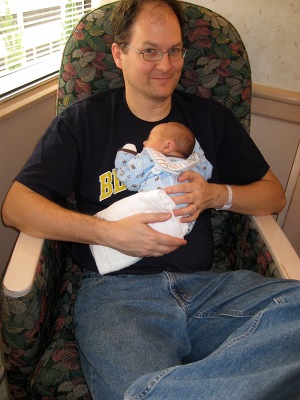
On top of that, he’s a great dad to Kiddo. They play together, they read books, they enjoy being around each other.
Kiddo is continually amazing us with how quickly he learns things, and he gets plenty of love and praise from his dad whenever he shows off a new talent.

I love him (both of them) so much.


Happy anniversary, dearest husband.  Here’s to many more wonderful years together.


Photos 3, 4, 5 and 9 copyright 2008 Rathbone Images

Photo 2 courtesy of Jan Chong


2 Comments

Step 1: Make a list.

I’m just going to come out with it here.  I’ve found something that helps me cope with my hectic days and too-short weeks.  It’s becoming something I rely on–perhaps even depend on.  I’m lost without it.

Hi, I’m Jessica, and I’m a Listmaker.

Bah, you say.  Everyone makes lists.  Everyone knows that making a task list can help keep you on track.  I agree.  However, earlier this week I went a couple of days without making my standard to-do list, and felt totally at sea by the afternoon.  What was I doing just now?  It was so easy to get sidetracked.  Perhaps I’ve become addicted to my list board.

The list board is a small whiteboard on my desk at work.  It’s about the size of a standard piece of paper.  I’ve got a set of four whiteboard markers next to it, the same ones my whole company uses on the large wall whiteboards in conference rooms.  Every day before I leave the office, I erase the contents (writing them in a small notebook for posterity and to use in my weekly status reports) and then I make a new list of what I know I’ll need to do the next day.  I use the large markers because I’m not trying to summarize the task, just keep track of it, and if it takes me more than three or four words to capture it then perhaps it needs to be broken into smaller steps.  “Meet w/ George” “Test plan feedback” “Code review for E” were some of yesterday’s items–just a couple of words per item, enough to trigger my memory .  The whiteboard isn’t to document the details of the task.  It’s mainly a way to keep my work items in front of me throughout the day.  Its small size, combined with the thick-tipped markers, help keep my workload at a do-able level.  If I was able to write as small as I can on a pad of paper, it would be really easy to fill the board with a set of tasks that I couldn’t realistically complete in a day.  And on the rare day that I do finish everything on the whiteboard, there’s a “Future To-Do” list in the notebook with extra tasks to work on.

I also color-code my tasks.  Black ones are work-related ones, blue ones are personal ones like “Dentist appt.”  I check off the completed ones with green marker, and mark the ones that are blocked or postponed with red.  (Not coincidentally, these are the four colors available in the company office supply rooms.)  I tried crossing off items as I completed them, but that was getting the tip of my green marker all messy.  It also made the items hard to read at the end of the day.

I used to use a spiral notebook for tasks, and I’ve long been known to jot notes on whatever scrap of paper I can find when I need to remember something.  That worked, but the little whiteboard has been really helping me narrow my focus so that I can get through just today’s tasks without being overwhelmed or stressed out about the things I need to do next week.  Those items are documented in emails and on my calendar, so as long as I’m checking it regularly (or, um, obsessively) I don’t forget about them.  But one source of stress for me has been getting too focused on the big-picture glob of things to do, to the point where it’s hard for me to stay on track working on a single small piece of that glob.  The whiteboard has another advantage that paper lists don’t: at the end of the day, it’s so satisfying to literally wipe the slate clean and start anew.

Keeping the whiteboard list on my desk has helped me a lot over the past few weeks.  I haven’t yet carried the practice home for evening and weekend productivity, but that’s because I keep coming up with other things to do that are more important than fixing our whiteboard so that it hangs properly, or rounding up a set of markers.  One of these days I’ll remember to do those things.  Hey!  Maybe I should put them on a list!


Leave a comment

So smart, and shiny too!

Just before Christmas I got a new phone, the HTC HD7.  Every cell phone I’ve had before now has been a tool for making phone calls, sending and receiving text messages, and occasionally taking pictures.  I’d been content with this for years, and my iPod Touch filled the gap for when I needed a quick Sudoku game or email check.  But sometime last summer I started thinking that when my current phone wore out, it might be time to join the era of the smartphone.

I chose the HD7 for two reasons: my service provider (T-Mobile) carried it, and my workplace reimbursed its purchase.  I didn’t comparison-shop for the best plan or try out lots of different models, so I’m not the person to say whether this particular smartphone is definitively better than any other.  What I am is a brand new smartphone user, one who often doesn’t have both hands free to do things on the phone because I’m carrying multiple bags, or managing a small child, or driving to work.  (PSA: Washington State law prohibits driving while texting on a cell phone or talking without the use of a hands-free system.  So, y’know, don’t do that.)  I am merely someone switching from a “dumb” phone to a device that has the fancy bells and ringtones and requires a data plan.

So far? I’m loving it.

For the first couple of days I simply enjoyed the new-toy aspect of it.  But during our Christmas travels, I had a few “wow” moments that really drove home for me how a smartphone can make my life easier.

The first was just after we’d left the driveway.  My husband and I realized that we’d forgotten to call our hotel to reserve a crib reserved for that night.  We’d also forgotten to write down their phone number.  I launched Bing on my phone and typed in the hotel name.  I expected that I’d get a standard page of links, and that I’d have to scroll and click to find the phone number.  Instead, Bing popped up a contact card for the hotel, including a one-touch hotlink to dial the number directly from the contact page!  I was delighted.

Another neat moment happened on our return trip.  Kiddo was cranky after two days of car riding, and ripe for a diaper change.  I knew there was a rest area not too far ahead, but couldn’t remember whether it was twenty miles or forty.  With the Maps app I was able to pinpoint our position, search for “rest area” (it found three close by, including the one I was looking for) and check the distance from our current location.  Sure, our Garmin probably could have told us the same thing… if we could have remembered how to pull up that information on it without losing our current route data.

The ads for the Windows Phone 7 talk about how this OS was designed to make it easier to “glance and go,” so that you spend less time interacting with the device and more time interacting with the real world. While I can’t compare to the other smartphones they’re positioning themselves against, I have found that it’s much faster for me to triage new text messages and missed calls with this phone than it was with my old phone.  Dialing my frequent calls feels a little slower–I think it takes one click more than I’d like it to.  And I kept hanging up on people accidentally when I press the phone against my cheek, but that would be a hazard of any touchscreen phone.  Reviews and commentators have mentioned a few of the items this phone is missing, like the ability to view Flash websites (which I’m told is coming sometime this year) and basic cut-copy-paste functionality.  But in spite of those holes, I’ve found the HD7 to be extremely easy to use.  I don’t think I’ve looked at the manual or any how-to website since the day I bought it.

There’s plenty that I like about my new phone, but what I really love are the ways in which it brings useful things together like electronic chocolate and peanut butter.  Web search plus one-touch dialing.  GPS location plus directions lookup.  And my current favorite?  Well, that would be the one I had to use the other night.  We’d been out doing some evening errands, and on our way to pick up Kiddo from the babysitter I realized I’d misplaced my phone.  Crisis!  I revisited our stops after we collected the boy, but no one had seen it.  It might have been a miserable night, except that I’d added a Windows Live ID to the phone when I was setting up email accounts.  Once I got home I logged on to the Windows Phone website with that LiveID.  And sure enough…

Screenshot of Map it: See your phone's approximate location on a map

If only the rest of my life came with such guidance!


Leave a comment

I’m still here

It’s been almost two weeks since I last wrote in this blog.  Since that last post, I’ve had a birthday, spent a weekend puzzling, enjoyed some time with visiting family, and oh yeah, worked worked worked.  This has been a very busy month at my job and I’ve been having a hard time finding any spare moments to write.  I’ve got plenty of ideas brewing that pull from both my “geek” side and my “mama” side; now all I need is time to make those ideas into complete sentences.

So far, I think I’ve done all right with my resolution to be less self-critical.  (I almost added “but we’re only a couple of weeks into the year, after all.”  See how automatic it is for me to take myself down?  Still needs work.)  I’ve also made some good progress on a couple personal projects, and even managed to keep the house tidier than it has been in a long while.  I’ll talk about the projects and organization in another post, because I’m really pleased with how some of it has come out.

I started this writing project as an outlet for myself, and maybe a little bit because I read friends’ blogs and thought, “Hey, I could do that too!”  I had grand ideas about how often I would write, and what kinds of topics I would cover.  Most of those grand ideas went out the window before this blog was a month old.  But maybe that’s for the best.  In the past few weeks I’ve heard from some unexpected sources that they’ve been reading and really enjoying my writing, and it’s been such a boost, right when I really needed one.

So, in spite of my recent reticence, I really am still here, and plan to be here for quite some time.  Thank you, family and friends, for still being here too.


7 Comments

They don’t all have to be home runs

I’m very critical of myself and the work I do.  The bar I set to determine my own success is ten times higher than I’d ever expect from anyone else.  I know that setting this kind of expectation for myself is silly and can be self-defeating, yet I do it anyway.  At least I’m aware of it, right?

When I was a kid, I wanted to be a writer.  Even back then I knew my strengths (some of them, anyway) and I knew this was something I was good at.  Maybe it came from all the reading I did as a kid, and being exposed to vocabulary and wordsmithery well above my grade level.  But I knew this: I was a good writer, and I had a good imagination.  At the same time, I was practical enough to know that you have to be really, really, REALLY good to make a living as a novelist.  (As an adult, having read plenty of books by certain authors who I won’t name, I’ll add “or really, really, really prolific.”)

When I realized that there was another way to earn a living by writing, I got very excited, and I embraced the idea of becoming a journalist–specifically, a newspaper reporter.  My enthusiasm carried me through high school and through most of my undergraduate degree, except that somewhere in there I got the idea that reporters have to be on call at all hours of the day and night, not unlike doctors and firefighters.  Not to mention the fact that the journalism world, at that time, was a) highly competitive, and b) not highly paying.  In high school I’d been a big fish in a small pond; in college, I was discovering that I was not the only big fish around, and that in fact there were several who were much bigger than me, and justifiably so.

I was saved from having to wrestle with the realities of doing what I loved versus doing what paid the bills, because my senior year of college was 1994-95, and this thing called the World Wide Web was really starting to become a Big Thing, and a couple of my good friends from my hometown were working on their computer science degrees.  The year after I graduated with my journalism degree, I found myself going back to college for a few non-degree graduate courses.  Before long, my professor had talked me into studying for a master’s degree.  Apparently writing wasn’t the only thing that I was good at.  So that’s how I ended up here, at this job, rather than somewhere in a newsroom.  I’m grateful, because this path led me to many other happy things as well, such as Husband and Kiddo.

But I never lost that passion for writing, and I really enjoy putting words together to make something interesting, something that means something to me and hopefully to others as well.  Most of my blog entries take me a long time to write, and most of them don’t get published right after I finish composing them.  I like to put a composition away for a little while and then come back and see if there’s anything I can tweak to make it just a little tighter.  Any typos or miswordings that need to be fixed.  Any long sentences (I do have an unfortunate tendency to write too-long sentences) that could be shortened or broken in half for easier reading.  Any parenthetical asides that would be better left out (because I use too many of those, too.)  In short, anything that could be made better… and that’s where I get into trouble.  That intense self-critical-ness (is that even a word?) and the constant striving for perfection tend to make me very nit-picky about what I write, and sometimes will hinder me from actually publishing whatever I’ve produced.

Last night, for example, I worked on a post for quite a while.  I’d actually written most of it last month, but was trying to find a way to tie it all together and wrap everything up with a neat conclusion, and finally get the darn thing out of my drafts folder.  It just wasn’t happening, and I was getting frustrated.  This morning I got to work, re-read it, and decided I didn’t like what I’d settled on last night.  But then I spent a little of my wake-up time (that period of adjustment where I mentally change gears from being a mom to being a software tester) reading other blogs, and something I’ve been hearing for years finally worked its way through to my full attention.

They don’t all have to be home runs.  They don’t even all have to be triples, or doubles, or hell, even be hits at all.  They don’t all have to be 750-word essays full of insights, illustrated with a cute and well-framed photo, and neatly wrapped up with a witty yet thoughtful conclusion.  They should all be good efforts, and they shouldn’t be anything that I’m ashamed to attach my name to, but they don’t all have to be perfect.

(My husband would be applauding me right now, if he were reading over my shoulder, because he’s been trying to get that through to me for years.)

It’s been years since I’ve made real New Year’s resolutions, and longer since I actually published them for others to see.  But I’ll put a stake into the ground this year.  For 2011, I’m going to try to be less self-critical, and less worried about how others see me.  I don’t know how to measure that, and I don’t know whether I’ll be able to stick to it.  I do know that when I lighten up, I have more fun with what I’m doing, and feel better about the results regardless of whether they fall short of my bar.  So here’s to a new year, and a new chance, and not waiting when I have something to say, and not always looking for the perfect words to leave the proper lasting impression.  Sometimes, imperfect is an okay thing to be.


3 Comments

Intersect: a fresh way to say you’ve been where and done what

Last month a friend of mine pointed me to Intersect, a new web site for sharing stories.  After I spent a little time surfing around the site, reading stories and FAQs and getting a feel for the general vibe, I posted my first story.  And just like that, I was hooked.

The idea behind Intersect is straightforward: wouldn’t it be neat to share what happened at a specific time and/or location, without needing to know who else was there or make arrangements in advance?  Stories posted are tagged with a date and time.  The ones you post are added to your storyline; if you find someone else’s story about an event that you attended, like a concert or sporting event, you can borrow that story with a click of a button and incorporate it in your own timeline.  The site makes it easy to search for stories from an intersection of place and time, as well as to create your own from text, photos, videos, or any combination of the above.

I love Intersect CEO Peter Rinearson’s description of how the concept came about:

The idea for Intersect came to me while watching my daughter play lacrosse. I was among several parents shooting photos on the sidelines, and it struck me that other parents were getting shots of my daughter that I’d never see and I was capturing images that other parents might want. Wouldn’t it be great if we could trade photos in some really easy way, even with strangers, and without prearrangement?

It was May 10, 2007 at 4 p.m. The location was Mercer Lid Park, built above Interstate 90 on Mercer Island, a suburb of Seattle. Shouldn’t that be enough information to let me share with other people who were at that same intersection of time and place?

Intersect was born that day.

Stories can be shared with the general public, restricted to circles of Intersect members that you define, or kept private.  While they do require a place, you can be as specific or as vague as you are comfortable with sharing.  As they are posted, they are added to your storyline in correct chronological order, so you don’t need to go back later and juggle dates to make them all line up correctly.  Unlike Foursquare or Facebook Places, which tell people where you are right now, Intersect lets you say that you were somewhere last week, or last year; you don’t need to reveal your current location to people who might take advantage of the fact that you’re away from home.  The Intersect staff offer some tips for walking the line between keeping personal information private and sharing stories with an interested public.  On the other hand, if you don’t mind sharing events simultaneously as they unfold, there’s an app for that too.

With an abundance of websites where we can share media and personal news, why choose Intersect?  There are a number of features that I find really appealing.

I like how it’s easy to upload photos to your photo pool and create a story from them.  I also like the flexibility around how long a story can be.  Sometimes you want to write a longer story to accompany a photo; sometimes a sentence or two will suffice.  Facebook is pretty strong in the photo sharing department, but writing anything longer than a short caption feels clunky, and most of it ends up hidden.  Intersect provides a cleaner-feeling combination of story and exposition.  You can even assign different profile pictures to different points in time, and then see how you’ve changed over the years.

The way stories can connect across time and place is a neat concept to me, and Intersect makes this happen transparently.  No need to hope your Twitter hashtag catches on, or to set up a shared folder and rely on word of mouth to get everyone invited to it.

Scanning back through a friend’s storyline is easy to do.  One thing I enjoy doing when I start following a new blog or Twitter feed is skimming back over the past several dozen entries to get some background for what’s been going on in that person’s world.  With Twitter it’s hard to get to a specific point in time.  With Intersect, it’s trivial.

Initial view of a storyline's time selector

Time selector set to a specific range

The Intersect community so far has a welcoming, friendly feel, which is also a big draw for me.  People have commented on stories I’ve posted, sharing memories of their own about the event or place.  This really helps to foster a feeling of connection, underlining the core idea behind Intersect: we are connected to many people in many ways.

Here’s a fun video by cartoonist David Horsey summarizing what Intersect is all about:


3 Comments

The penny finally drops

I was standing in line at the grocery store one night recently when Dennis DeYoung’s “Desert Moon” started playing. That album has the dubious honor of being the very first album I ever bought with my own money, at the tender age of 12. I brought it home and popped it in the tape deck of the living room stereo, and then went into the kitchen with my mom and tried to act all nonchalant, oh, we’re just listening to some music that I picked out, no big deal, not going to act like it’s important to me that anyone likes my musical tastes… I don’t remember anymore how my mom actually did react to it–I think I was trying hard not to see her reaction because I didn’t want to know if she disapproved.

For most of my growing-up years, the primary motivator behind my choices was whether Other People would approve of them.  I was a chunky kid with brains, glasses, and braces. I didn’t know how to do my hair or makeup and I had no sense of style.  Junior high girls can be some of the most insecure creatures on this planet, and often the only way we know how to build ourselves up is to pull down others.  We do things that make no sense to adults because we think those actions will make us look cooler to the boys we want to impress and the girls we want to surpass.

In my struggle to not be at the bottom of the social ladder, I had this idea that anything and everything I did during non-school hours was going to get back to the popular kids and give them fodder for talking behind my back.  It wasn’t supposed to be cool to have a close family life, so I tried to push it away.  I scowled in family photos, and I sequestered myself away from my parents and sisters rather than risk someone catching me actually having fun with them.  Heaven forbid!  I’d be ostracized forever.

Yet, at the same time that I wanted my classmates to approve of me, I also wanted my parents to approve of me, and that was a tricky tightrope to walk. I wanted to be the kid who could come home and talk with her mom about what happened in school and what this boy said and what it all meant.  But I always felt awkward doing so, because what if she thought my worries were dumb?  So I damped it down, tried to pretend it was No Big Thing, just something I was casually wondering about.  Even now I sometimes reflexively hold back a bit when talking about my life, because it’s crushing to be told that something you’re passionate about is stupid, or worse, uninteresting.

With the birth of my son, it was as if the lens through which I viewed my childhood was twisted ninety degrees. I gazed adoringly at my tiny newborn, thinking Oh my god, this little boy is less than a day old and I already love him so much that I can’t believe my heart can actually hold all that love.

Followed by Oh my god, THIS is how my mother feels about ME!

And then Oh my god, I was such a little shit!

I used to cringe when I looked back at my younger years because of all the ridiculous things I did. Now I cringe as I look back and realize how I unintentionally hurt people.

When I was in fifth grade, my mom made a maroon blazer for me to wear for school picture day. She bought the pattern and the fabric and stayed up late nights sewing it.  The night before pictures, the blazer wasn’t quite finished when I went to bed, but when I woke up, it was hanging on my bedroom door.  What were my first words?  Not “Yay, Mom, you finshed it, thank you!”  They were  “…but it doesn’t have any buttons on it.”

Someday I’m going to get my own time machine, and one of the first things I’m going to do is jump back to ten-year-old me and smack myself upside the head.

I don’t know where that blazer is now, but I might dig up one of the old school pictures and keep it on my dresser as a reminder.  Because one day, I’ll be on the other side of that conversation.  I’ll be the mom who just wants to make sure that her child is doing OK. He’ll be the one balancing peer approval with parental approval and unthinkingly saying things that hurt my feelings.

We are the product of our accumulated experiences, and if I hadn’t had all the twists and turns that I did, I wouldn’t be who I am today.  I like the person I’ve become, but I wish there was a way I could tell fifth-grade or eighth-grade or eleventh-grade me to worry less about what my classmates thought.  It’s OK to love and be loved by your family.  They’ll keep doing it, even if it’s uncool, so you might as well love them back.